
- Home
- James Hadley Chase
This is For Real
This is For Real Read online
THIS IS FOR REAL
James Hadley Chase was the pseudonym of successful British crime writer René Brabazon Raymond. Born in 1906 to a British colonel in the Indian Army, he was educated at King’s School, Rochester in Kent and later studied in Calcutta. Leaving home at 18, he forewent an intended scientific career to work as an encyclopedia salesman and book wholesaler. Inspired by the works of hardboiled American crime writers, Chase wrote his first novel, No Orchids for Miss Blandish, in 1938. It achieved remarkable popularity, and Chase dedicated himself to writing full time. He developed a number of dynamic series characters that featured in fast moving tales of murder, blackmail and espionage. At the time, his novels were controversial for their use of violence and sex, full of deadly villains and beautiful treacherous women. Although Chase set many of his books in America, he never lived there, instead deriving his knowledge from encyclopedias, detailed maps, and a slang dictionary. During WWII, he served in the Royal Air Force, eventually achieving the rank of Squadron Leader (and simultaneously editing the RAF Journal). As an author he wrote more than 80 thrillers and enjoyed an enormous worldwide following. Translated into dozens of languages, his books have been widely adapted for film and television. Living a secluded life, Chase moved to France in 1956, and then to Switzerland in 1961. He died in 1985.
THIS IS FOR REAL
JAMES HADLEY CHASE
THE LANGTAIL PRESS
LONDON
This edition published 2011 by
The Langtail Press
www.langtailpress.com
This is For Real © 1965 Hervey Raymond
ISBN 978-1-78002-035-8
THIS IS FOR REAL
CHAPTER ONE
Two Americans sat at a corner table, well away from the group of newspaper men lounging up at the bar in the Paris Crillon Bar. One of them was an elderly, bird-like man, wearing rimless spectacles and a neatly pressed City suit. His name was John Dorey. He was believed to be something unimportant at the American Embassy.
His companion was Harry Rossland, a large, overweight man in his late forties. He wore a baggy Scotch tweed suit and dusty brogue shoes. Rossland had lived so long in Paris he had become part of the Parisian background. He appeared to make a modest living writing articles on Modern Art and was regarded as a harmless phoney.
The two men were talking in undertones. Rossland was drinking whisky on the rocks: Dorey a tomato juice.
No one, if they happened to be interested, could judge by their expressions, the importance or the triviality of the subject under discussion.
Dorey said, “Well, there it is. Could be something; could be a hoax. I want you to handle it, Harry. Until I am convinced she’s either got something or is a nut, this remains unofficial.”
Rossland rattled two cubes of ice in his empty glass. He said, “I don’t handle any jobs personally. You know that by now, but I’ll get one of the boys to do it if you like. He’ll want thirty bucks for his trouble.”
“It’s not worth thirty dollars,” Dorey said sharply. He hated parting with money. “All he has to do is to meet this woman and find out what she has to sell. If it becomes important, then of course, he’ll get paid.”
Rossland waved his empty glass at a waiter. He knew Dorey would pick up the check and he was thirsty. There was a pause while the waiter brought another whisky on the rocks. When he had returned to the bar, Rossland said, “It’s thirty bucks or nothing. This could be some sort of trap. Have you thought of that? Warley might be getting fed up with the way you’re interfering, Dorey. I’m not saying he is, but you’re continually handling things on your own when by rights they should be reported to him. This woman might be one of Warley’s people. It’s just possible he’s setting a trap to get you sent home.”
Dorey had already thought of this possibility, but he was sure Warley wouldn’t do a thing like that. In a way, Dorey rather wished Warley would take enough interest in him to try to trap him.
“Well, all right. I’ll run to thirty dollars,” he said. “You don’t have to worry about Warley. He’s too busy being a new broom to bother about what I’m doing.” He paused, then went on, “I want action, Harry. If this woman has something really worth selling – which I doubt – she might approach others.”
Rossland grinned. He knew Dorey lived under the shadow of the Russian bogey.
“Give me the money and you’ll get plenty of action.”
Dorey studied the big fleshy face opposite him.
“I sometimes wonder, Harry, if you realise your responsibilities when you’re working for me.”
Rossland laughed.
“I’ve never let you down yet, have I?”
“There’s always a first time.”
“Cheer up. I’ll get one of the boys to see this woman and I’ll call you at your place as soon as he has seen her.”
“Who will you send?” Dorey’s pale eyes peered at Rossland from behind the shining lenses of his glasses.
“So long as he does the job, why should you care?” Rossland said and finished his drink.
Dorey shrugged, then he signalled to the barman and paid for the drinks. The two men got to their feet. As they stepped out into Rue Bossy d’Anglas, Dorey slid a crumpled roll of notes into Rossland’s hand.
Rossland paused long enough to watch Dorey cross the street and head with brisk steps towards the American Embassy, then he turned right and walked along Rue Faubourg St. Honoré.
He hummed softly and from time to time, he fingered the roll of money in his pocket.
He paused at the intersection leading to Place Vendôme and waited impatiently for the traffic lights to turn red. There was a slight nip in the April wind, but fortified by two double whiskies, Rossland accepted the slight shiver of cold that ran down his fat spine.
As the traffic stopped, he strode across the road and continued on until he reached the side entrance to the bar of the Normandy Hotel. He entered and shook hands with the barman whom he had known for years. He ordered a double whisky on the rocks and then moved around the bar to the telephone booth. He shut himself in and dialled a Fontenoy number. Cradling the receiver between his ear and his shoulder, he took out a pack of cigarettes, shook out a cigarette and lit it.
A man’s voice said over the line, “’Allo?”
“Girland? This is Harry.”
“Oh. For God’s sake! Look, Harry I’m busy right now. Suppose you call me back in a couple of hours?”
Rossland grinned. He knew just what was occupying Girland.
“You’re way out of luck,” he said. “Tell her to go home if she has a home. That horse we put our shirts on ran last.”
Rossland heard Girland mutter, “Merde!” and he again grinned unsympathetically.
“Give me an hour for God’s sake,” Girland pleaded.
“See you in fifteen minutes. Entrance Odéon Métro,” Rossland said firmly and hung up.
He moved out of the telephone booth to where his drink waited on the bar. As he reached for it, he looked around the well-appointed bar. There were three or four couples drinking and talking. Rossland glanced briefly at them and then his eyes rested for a moment on a young man who was reading France-Soir, a full glass of Pernod and water on the table in front of him. Rossland looked immediately away, but he had registered every detail of the young man’s appearance. He was around twenty years of age. He wore a shabby dark overcoat, belted like a dressing-gown. His closely cut hair was black and he wore a chin beard that made him look younger than he was. His eyes were dark ringed; his complexion sallow. He looked out of place in this bar and Rossland’s mind became alert with suspicion.
He drank half his whisky, then leaning forward, he asked the barman, “That boy over there … has he been here l
ong?”
“Came in just after you, Mr. Rossland.”
Rossland stubbed out his cigarette. Years of experience had taught him always to be suspicious of people who didn’t fit into a background, and this young man didn’t fit at all. He finished his drink and paid.
He shook hands with the barman, mentioned the cold wind and then walked into the hotel’s lobby. He left by the main entrance, paused on the edge of the kerb to let three cars pass, then crossed the street, heading for the Palais Royal Métro. He again had to wait at the next crossing while the traffic fought its way into Rue de Rivoli. As he stood waiting, he took a small mirror from his pocket. He held this, half concealed in his large, hairy hand. The mirror picked up the young man who had been in the bar. He too waited for a lull in the traffic at the further crossing.
Rossland returned the mirror to his pocket. His expression was now thoughtful. Dorey had said this set-up might be a hoax. He had also said others might be approached. Maybe this bearded young man meant nothing, but Rossland was far too experienced to take chances. He crossed the street and walked down the steps of the Métro. He bought a ticket, then went slowly towards the Nation line. He would have to change at Châtelet for Odéon. There was a two minute wait before the train came in. Rossland got in, resisting the temptation to look along the platform. He remained by the doors. At Châtelet, he waited until the doors began to close, then he shoved them back with his immense strength and stepped onto the platform. The doors snapped to and the train moved out of the station.
He had a brief glimpse of the bearded young man staring at him from a third-class compartment, and Rossland saluted him with a cheerful wave of his hand.
Mark Girland dropped the telephone receiver back onto its cradle with an exclamation of disgust.
Tessa – she hadn’t yet told him her other name - looked inquiringly at him. She was seated in a canvas deck chair, the nearest thing to comfort Girland aspired to.
Tessa was a well-built blonde, around twenty-four, with an oval-shaped face, large blue eyes, a good nose and mouth. She wore a green sweater across which was inscribed New York Herald Tribune. Her wool black trousers fitted her hips and long legs in a glove-like caress.
She had offered Girland the last of her newspapers on Boulevard Brune. He had been attracted by her long legs and her blue eyes and he had cast his charm before her. He had an easy, confident way with women. The fact they were both Americans broke down the usual barriers very quickly. They had a drink together. Girland found the girl amusing and sexually exciting. When he paid for the drinks, he said in his usual confident manner, “It seems a pity we should say goodbye. Would you like to come back to my place? We could spend the evening together.” He paused and smiled at her. “Then if we find we like each other, as I think we will, we could spend the night together.”
The girl had laughed. He was pleased she hadn’t been shocked nor embarrassed.
“You’re not shy, are you?” she said. “I’ll come back to your place, but that’s as far as it will go.” She studied him, then added, “At least, that’s what I think now.”
He took her back to his sixth floor one room apartment in Rue de Suisses. He followed behind her as they climbed the stairs. He thought she had the prettiest shaped bottom he had seen on a woman for a long time. They paused, a little breathlessly while he unlocked the door to his apartment.
The room was large with two big windows overlooking the roofs, the chimneys and the television aerials of Paris. It contained only the bare essentials with no comfort. There was a double bed. Two benches stood either side of a worm-eaten refectory table. At the far end of the room, under the window, was a kitchen sink. There was a big radio and gramophone against another wall. Two canvas deck chairs substituted for armchairs. A wardrobe and a bookcase crammed with American and French paperbacks completed the furnishing.
The girl looked around while Girland closed the door and leaned against it.
“This is nice,” she said. “I live in a closet. The space of it all! How lucky you are!”
Girland walked over to her and put his hands on her hip bones. They regarded each other, both smiling. He tightened his grip and pulled her against him. His mouth found hers. They remained like that, relaxed, for a brief moment, then she pushed him away and went over to sit in one of the deck chairs.
“Tell me about yourself,” she said. “What do you do? But first give me a cigarette.”
As Girland was searching his pockets, Rossland’s telephone call came through.
When he hung up, he said, “I’m sorry, but I have to go out. This is one of those things. I don’t know when I’ll be back, but will you stay? Will you make yourself at home? There’s the gramophone. There are books. You’ll find food in the refrigerator. It’ll be nice to think you are here, waiting for me.”
“I don’t think I’d better stay,” she said, but she made no move to get to her feet. She was looking at him, thinking he was handsome.
“You stay,” he urged. “I won’t be long. I want you to stay.”
“Well, all right, then I will stay.”
He nodded, then crossed the room and opened a door that led into a shower cabinet and toilet. He shut himself in. To the right of the shower was a ceiling high closet. He opened it, reached inside and found a cleverly hidden spring which he pressed. The back of the closet slide aside. He reached inside and took out a leather gun holster containing a small, flat ammonia gun. Taking off his jacket, he slipped the holster straps around his broad shoulders and put on his jacket again. He satisfied himself the gun showed no bulge, then he glanced at himself in the mirror above the toilet basin.
Girland was tall and dark. His face was thin, his eyes dark and deep-set, his mouth hard and his jaw aggressive. A few scattered white hairs either side of his temples made him look slightly older than his thirty-five years.
He ran a comb through his hair, then for the sake of appearance, he flushed the toilet and opened the door.
Tessa was kneeling before his bookcase, examining his books. She looked over her shoulder as he came to her and she smiled at him.
“Graham Greene, Chandler, Hemingway … we share the same taste in reading.”
He bent and kissed her.
“There’ll be other things we’ll share,” he said and his hand moved down her long back and across her buttocks.
She remained motionless, but her eyes became hostile.
“You mustn’t be too free with me. I don’t like men who take me for granted,” she said.
He stood away from her.
“I never take anything for granted,” he said, “but I live under pressure. I feel life is always trying to escape me. I used to spend too much time manoeuvring with women. Now, I try the direct approach. Sometimes, more often than not, it succeeds.”
She had nothing to say to this, but she asked, “Where are you going?”
He smiled. He looked young and guileless when he smiled.
“To see a man about a dog. Wait for me. If the telephone rings, don’t answer it. Keep the door locked. You won’t be disturbed. There’s a beautiful steak in the refrigerator. It’s all yours. See you sometime tonight.”
He left the apartment and began the long descent to the street.
Tessa remained on her knees, staring blankly at the books on the shelves. She listened to Girland’s fading footfalls, then she got to her feet and walked silently to the door and opened it. She stepped out onto the dusty, dimly lit landing and leaned over the banister rail. Far below, she caught a glimpse of Girland as he pushed open the street door. Turning quickly, she re-entered the apartment and closed and locked the door.
Then with methodical patience, she began to search the room.
Girland walked quickly down Rue de Suisses to where he had parked his Fiat 600. The little car was on its last legs. He paused to inspect the blister on the front offside tyre. He decided the tyre might or might not survive another fifty kilometres. Climbing into the car, he coaxed the en
gine to start, then engaging gear, he edged the car into the continuous stream of traffic.
When eventually he arrived at the Odéon Métro, he found Rossland impatiently waiting for him. He pulled up by him.
Rossland came over, and with difficulty, squeezed himself into the passenger’s seat.
“You’re late, damn it!” he complained. “Let’s go. Just keep driving.” He shifted his bulk in the small seat as Girland started the Fiat moving again. “God! What a car! When are you getting rid of this horrible poubelle?”
“It gets me around,” Girland said indifferently. “I’m no millionaire.” He glanced at Rossland. “Not that you care, but you’ve ruined what could have been a very interesting evening.”
“A woman again,” Rossland said and snorted. “Why can’t you leave women alone? You worry me, Mark. Seriously … there are too many women.”
“How’s your sex life?” Girland asked and laughed. “Don’t tell me you live like a monk.”
“Never mind how I live. I manage, but I don’t let women dictate my life … that’s the important thing. You think too much about women.”
“Skip it,” Girland said, suddenly impatient. “What’s cooking?”
“A job … it’s a queer one. Could be something; could be a hoax.”
“Is there any money in it? Right now I could do with some money.”
“When can’t you?” Rossland said sourly. “Women and money … that’s all you think about.”
“What else is there to think about?” Girland was studying in his driving mirror a black Citroen car that had been sitting on his tail now for the past three minutes. The driver had his hat pulled down to hide his face and he sat hunched behind the driving wheel. Girland abruptly swung the Fiat into a narrow street, leaving the boulevard and accelerated. He watched the Citroen swing into the street after him. He interrupted what Rossland was about to say. “I think we’re being tailed, Harry.”
 Come Easy, Go Easy
 Why Pick On ME?
 The Dead Stay Dumb
 Figure it Out For Yourself
 1944 - Just the Way It Is
 No Business Of Mine
 1953 - The Sucker Punch
 Cade
Cade 1973 - Have a Change of Scene
 An Ace up my Sleeve
 1968-An Ear to the Ground
 1950 - Figure it Out for Yourself
 1976 - Do Me a Favour Drop Dead
 The Flesh of The Orchid
 1974 - Goldfish Have No Hiding Place
 Whiff of Money
 1984 - Hit Them Where it Hurts
 1971 - Want to Stay Alive
 1980 - You Can Say That Again
 1978 - Consider Yourself Dead
 The Paw in The Bottle
 Soft Centre
 The Guilty Are Afraid
 The Soft Centre
 Have a Nice Night
 1957 - The Guilty Are Afraid
 1979 - You Must Be Kidding
 Knock, Knock! Who's There?
 1958 - The World in My Pocket
 Get a Load of This
 1958 - Not Safe to be Free
 This Way for a Shroud
 More Deadly Than the Male
 Safer Dead
 1945 - Blonde's Requiem
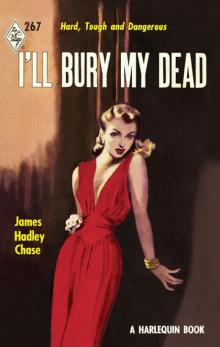 I'll Bury My Dead
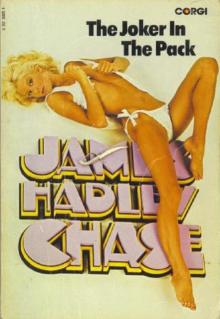 1975 - The Joker in the Pack
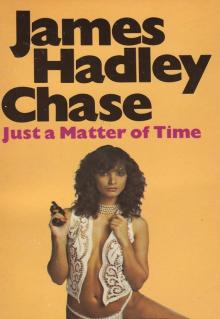 1972 - Just a Matter of Time
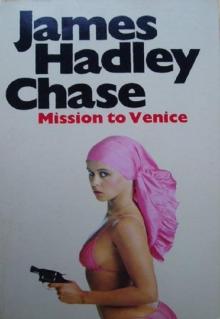 1954 - Mission to Venice
 Strictly for Cash
 A COFFIN FROM HONG KONG
 Lady—Here's Your Wreath
 I Would Rather Stay Poor
 Eve
Eve Vulture Is a Patient Bird
 1979 - A Can of Worms
 1949 - You're Lonely When You Dead
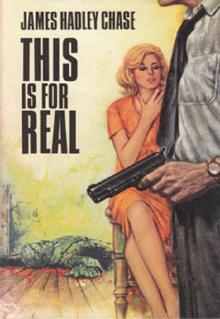 1965 - This is for Real
 (1941) Miss Callaghan Comes To Grief
 What`s Better Than Money
 This is For Real
 Lay Her Among the Lilies vm-2
 Knock Knock Whos There
 1952 - The Wary Transgressor
 1951 - But a Short Time to Live
 1962 - A Coffin From Hong Kong
 Tell It to the Birds
 Well Now, My Pretty…
 The World in My Pocket
 A Lotus for Miss Quon
 You Find Him, I'll Fix Him
 Lay Her Among The Lilies
 1951 - In a Vain Shadow
 Miss Shumway Waves a Wand
 1953 - This Way for a Shroud
 1964 - The Soft Centre
 You Can Say That Again
 1975 - Believe This You'll Believe Anything
 1954 - Safer Dead
 1960 - Come Easy, Go Easy
 Shock Treatment
 1953 - I'll Bury My Dead
 You Find Him – I'll Fix Him
 Dead Stay Dumb
 Just Another Sucker
 Well Now My Pretty
 You've Got It Coming
 1972 - You're Dead Without Money
 1955 - You Never Know With Women
 Not My Thing
 Hit and Run
 1971 - An Ace Up My Sleeve
 1970 - There's a Hippie on the Highway
 1968 - An Ear to the Ground
 1955 - You've Got It Coming
 1963 - One Bright Summer Morning
 1967 - Have This One on Me
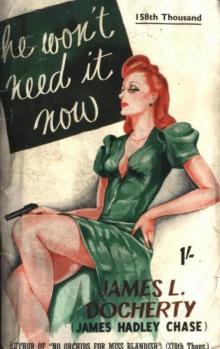 He Won't Need It Now
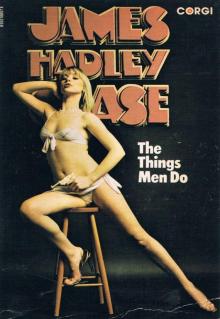 1953 - The Things Men Do
 Believed Violent
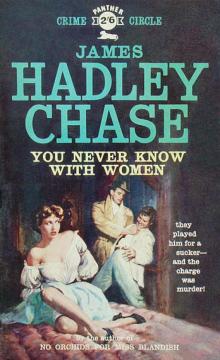 You Never Know With Women
 Miss Callaghan Comes to Grief
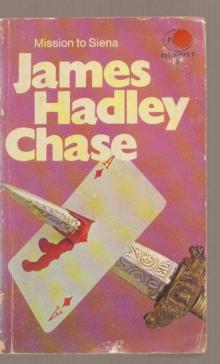 Mission to Siena
 What's Better Than Money
 Trusted Like The Fox
 I'll Get You for This
 Figure It Out for Yourself vm-3
 Like a Hole in the Head
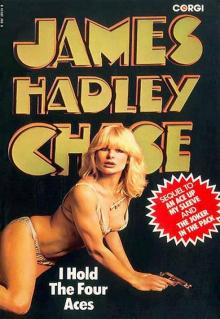 1977 - I Hold the Four Aces
 1969 - The Whiff of Money
 1946 - More Deadly than the Male
 1956 - There's Always a Price Tag
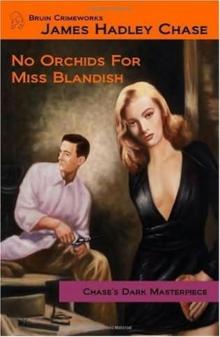 No Orchids for Miss Blandish
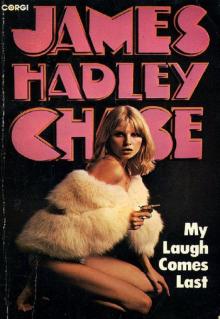 1977 - My Laugh Comes Last
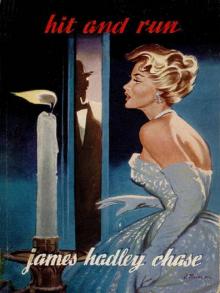 1958 - Hit and Run
 1981 - Hand Me a Fig Leaf
 1966 - You Have Yourself a Deal
 Tiger by the Tail